
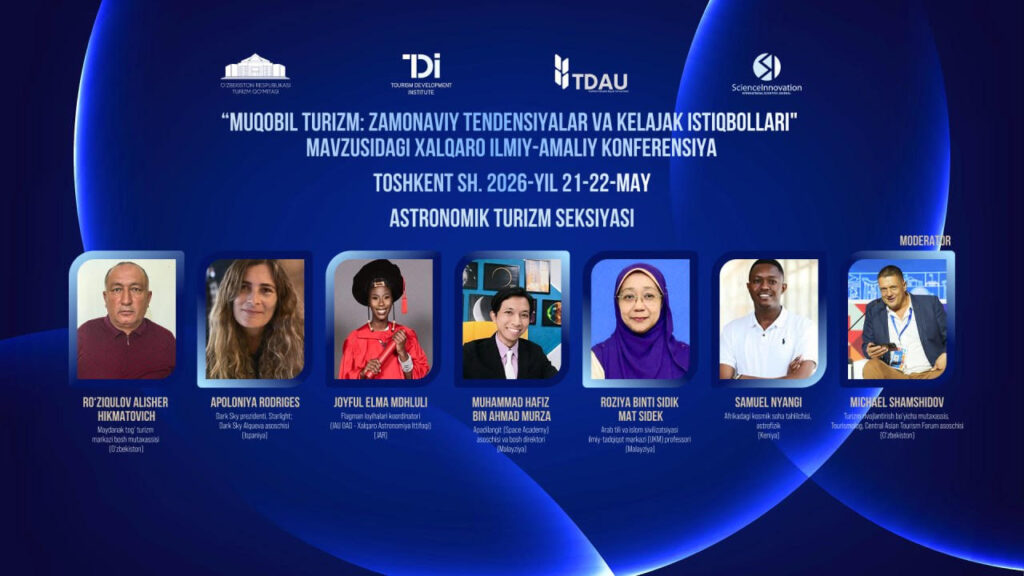
The growing global momentum behind astrotourism was on full display at the International Conference “Alternative Tourism: Modern Trends and Development Prospects,” hosted by the Scientific Research Tourism Development Institute in Uzbekistan. The conference brought together experts, researchers, and tourism practitioners from across the world to explore emerging opportunities, innovations, and challenges in alternative tourism sectors, including the rapidly expanding field of astrotourism.
The Astrotourism section, held online on 21 May 2026, showcased diverse perspectives on how astronomy-related tourism can contribute to science engagement, cultural preservation, education, and sustainable economic development. Participants heard from leading voices across multiple regions including Uzbekistan, Spain, Malaysia, South Africa and Kenya.
Representing the IAU Office of Astronomy for Development (OAD), Dr Joyful Mdhluli delivered a presentation titled “Astrotourism as a Catalyst for Sustainable Tourism, Cultural Heritage, and Local Community Development.” The presentation explored how astrotourism can serve as a bridge between science, culture, and sustainable development by encouraging the protection of dark skies, preserving Indigenous and cultural astronomy knowledge, and supporting local economies through community-based tourism initiatives. The presentation also highlighted the ongoing work of the OAD in supporting astrotourism globally through its growing flagship ecosystem, including training opportunities, community networks, funded projects, practical resources, and international collaborations. In addition, it showcased some of the opportunities and events available for individuals and organisations interested in developing astrotourism initiatives and connecting with the broader global astrotourism community.
A key theme emerging from the session was the inherently collaborative and interdisciplinary nature of astrotourism. Discussions highlighted how successful astrotourism initiatives often combine astronomy, heritage, environmental conservation, education, and tourism development. Participants also reflected on the importance of ensuring that local communities remain central beneficiaries of astrotourism growth.
The session concluded with an engaging discussion among participants, reinforcing the shared global interest in developing astrotourism responsibly and inclusively. From observatories in Uzbekistan to dark-sky destinations in Spain, and from community tourism initiatives in Africa to education-driven space engagement in Malaysia, the conference demonstrated the truly international scope of this growing field.
Special thanks go to the Scientific Research Tourism Development Institute for organising this valuable exchange and creating a platform for international collaboration in astrotourism development.
A recording of the presentation by Dr Mdhluli is available below with the recording of the full event below that.